Built for Product Scale
Custom Softgel Manufacturing
Premium softgels-gelatin or plant-based-optimized for fill stability, leak resistance, and shelf-life. Built for speed, quality, and scale insideFDA-registered, cGMP-certified, and NSF-certified partner.
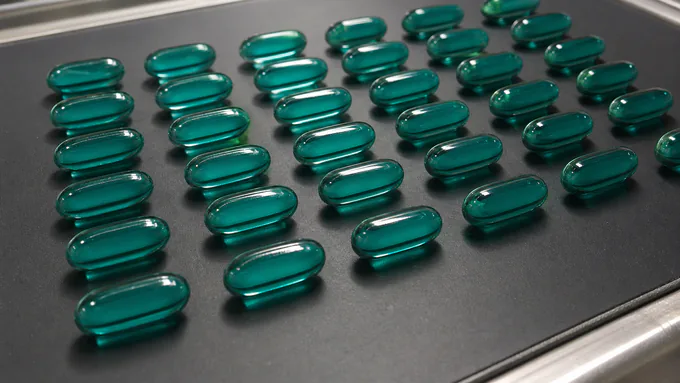
Softgels Engineered for Stability and Scale
We match shell chemistry, plasticizer ratios, and fill systems to your actives-then validate weight, seal integrity, and oxidation so production mirrors pilot.
Fill System Mastery
Triglyceride oils, MCT, omega concentrates, oil-suspended powders, or microemulsions tuned for viscosity, homogeneity, and active protection.
Shell & Seal Integrity
Gelatin or starch/HPMC systems balanced for strength and disintegration; banding and leak testing dialed in to reduce rejects.
Retail & Marketplace Ready
Documentation, COAs, and label logic aligned to FDA and channel standards to keep onboarding smooth and listings live.
Shell Options
- Gelatin (bovine, fish)
- Plant-based starch/HPMC
- Plasticizer systems tuned for climate
- Opaque, transparent, or two-tone colors
Fill Types
- Oils & omega concentrates
- Oil-suspended actives
- Emulsions & self-emulsifying systems
- Odor & taste masking strategies
Quality & Stability
- Fill weight & content uniformity
- Leak, seal, and rupture force checks
- Peroxide/anisidine (oils) & TOTOX trends
- Accelerated stability guidance
Presentation & Packaging
- Laser/inkjet printing & branding
- HDPE/PET bottles & blisters
- Nitrogen flush & oxygen barriers
- Retail cartons & kitting
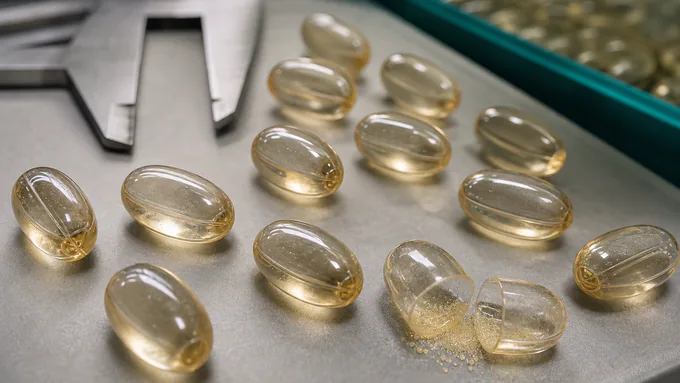
Our Softgel Workflow
A five-stage path that safeguards stability, seal integrity, and compliance while keeping timelines tight.
Brief & Targets
Claims, audience, dosage, target volume/size, and climate/shipping constraints mapped to a manufacturable plan.
Architecture
Shell system, plasticizer ratios, and fill type selected; oxidation and moisture risks addressed early.
Prototype
Lab batches with criteria for viscosity, fill weight, seal strength, disintegration, and visual appearance.
Pilot & Verification
Line trial confirms throughput, reject/leak rates, TOTOX trends for oils, and packaging fit; label logic validated.
Release
Final spec, COAs, master label, and documentation for repeatable scale and channel onboarding.
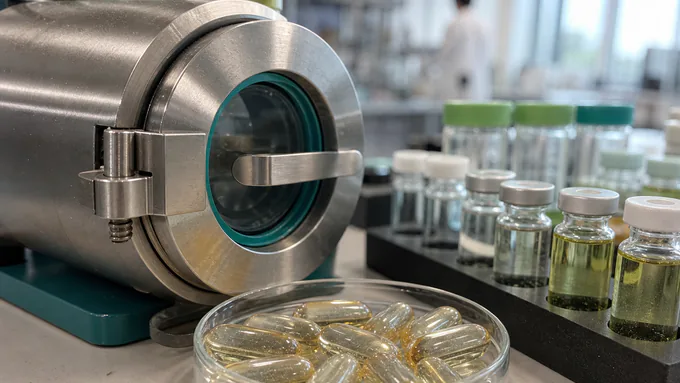
Quality, Documented
Every prototype and lot is traceable. In-process checks keep seals tight, oxygen low, and labels defensible.
- Fill weight & content uniformity
- Leak, seal, and rupture force testing
- Peroxide, anisidine, and TOTOX (oils)
- Microbial, heavy metals & identity/potency
Softgel Specialties
Differentiate with shape, finish, and targeted release-without sacrificing throughput or compliance.
Shapes & Branding
- Oval, oblong, round & specialty
- Custom colors & two-tone shells
- Laser/inkjet printing & anti-counterfeit
- Polish & visual consistency
Performance & Protection
- Enteric & targeted release options
- Nitrogen purging & oxygen barriers
- Light- and moisture-protective packaging
- Odor mitigation & flavor systems
Certifications & Preferences
- Halal/Kosher options by facility
- Allergen & gluten-free strategies
- Non-GMO & clean-label excipients
- Climate-aware shell systems
Softgel project planning
Softgel Inputs That Drive Feasibility
Softgel programs depend on fill compatibility, shell design, oxidation control, and documentation discipline.
APEX CSM reviews the oil system, active concentration, target serving size, capsule shape, color, opacity, and any ingredients that may require special handling. Softgel feasibility often depends on fill viscosity, active solubility, shell compatibility, oxygen sensitivity, and the testing needed to confirm potency and purity through release.
We also scope packaging and storage expectations early. Bottle resin, induction seals, desiccants, oxygen absorbers, carton options, temperature exposure, and freight planning can all affect finished-goods quality. Coordinating these details before production helps ensure the quote reflects the complete softgel program, not only the encapsulation step.
Fill inputs
Oil carrier, active load, viscosity, oxidation risk, allergens, and testing requirements.
Pack inputs
Count, bottle, closure, seal, desiccant, carton, case pack, and channel needs.
Quote inputs
Softgel quote readiness
A softgel quote starts with the fill system. APEX CSM reviews active load, carrier oil, solubility, viscosity, oxidation risk, target capsule size, shell color, opacity, and testing expectations before production requirements are finalized.
Packaging is part of the quality plan. Bottle resin, closure, induction seal, desiccant, oxygen control, carton, and shipping assumptions can influence finished-goods stability. Scoping those details early helps brands understand feasibility, cost, and reorder requirements.
- Fill carrier, active load, viscosity, and oxidation risk
- Shell size, color, opacity, and testing expectations
- Bottle, seal, desiccant, carton, and freight plan
Softgel FAQs
Answers on shells, leak control, oxidation, and timelines.
Do you offer plant-based softgels?
Yes. We support starch/HPMC systems for plant-based softgels and will recommend a shell matched to your fill and climate profile.
How do you prevent leaks and deformation?
We tune shell/plasticizer ratios, drying conditions, and banding parameters, then validate with leak and rupture force testing.
How is oxidation controlled for oil-based fills?
Nitrogen handling, low-oxygen packaging, and antioxidant strategies are paired with PV/AV monitoring to keep TOTOX within targets.
What are typical lead times and MOQs?
Lead times depend on shell type, color/printing, and fill complexity. We support flexible MOQs and prioritize the fastest compliant path to launch.